Welcome to our Clinical Research team. We are dedicated to advancing medical knowledge, improving patient outcomes, and helping bring innovative therapies to the world. Our work integrates scientific rigor, ethical responsibility, and a commitment to patient-centred care.
We aim to advance healthcare through rigorous, ethical, and patient‑focused clinical research. Every study we support moves us closer to better diagnostics, better therapies, and a better future for patients around the world.
Questions and answers about clinical research
Participation in any clinical trial is optional and once enrolled if you change your mind you can withdraw at any time. If you have any questions about any of the trials the Practice is currently participating in please do contact the Practice at hiowicb-hsi.chawtonparkresearch.patients@nhs.net or call 01420 542542 ask to speak to one of the research team.
Who is eligible to take part in clinical trial or study?
Suitable participants will be contacted by a member of the research team at Chawton Park Surgery. We will normally contact you via a phone call or text message or we may send you an information sheet in the post which provides all the details of the trial. The research team will then follow up with a phone call to find out whether you would like to take part in the trial, and they will answer any questions you may have.
You will always be given plenty of time to consider whether you would like to take part. If you decide to enter the trial, you can withdraw at any time if you feel it is not right for you.
We are currently recruiting to the studies listed below
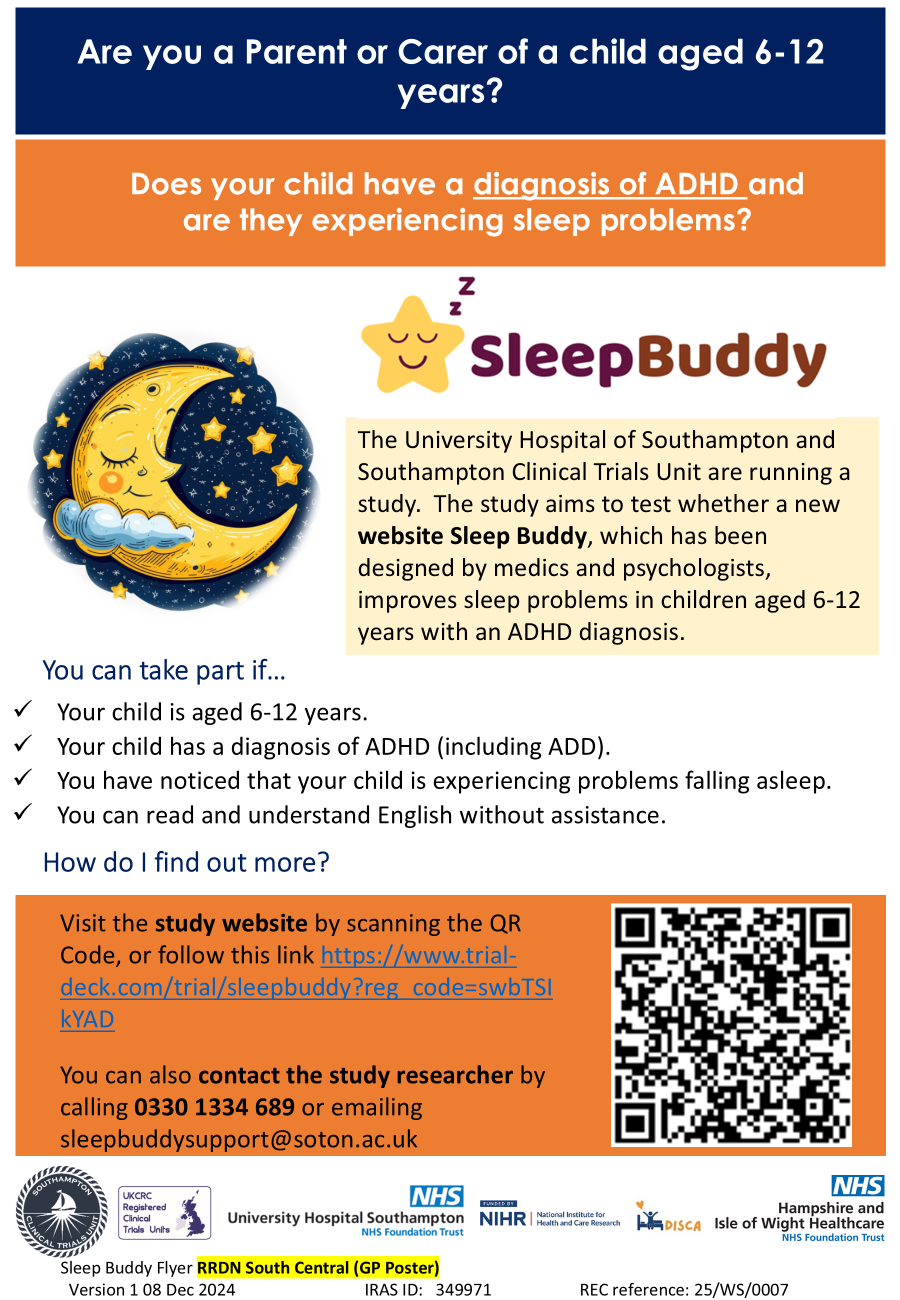
Sleep Buddy Study
We are looking for children aged between 6-12 with a diagnosis of ADHD who are experiencing sleep problems.
For further information contact: hiowicb-hsi.chawtonparkresearch.patients@nhs.net
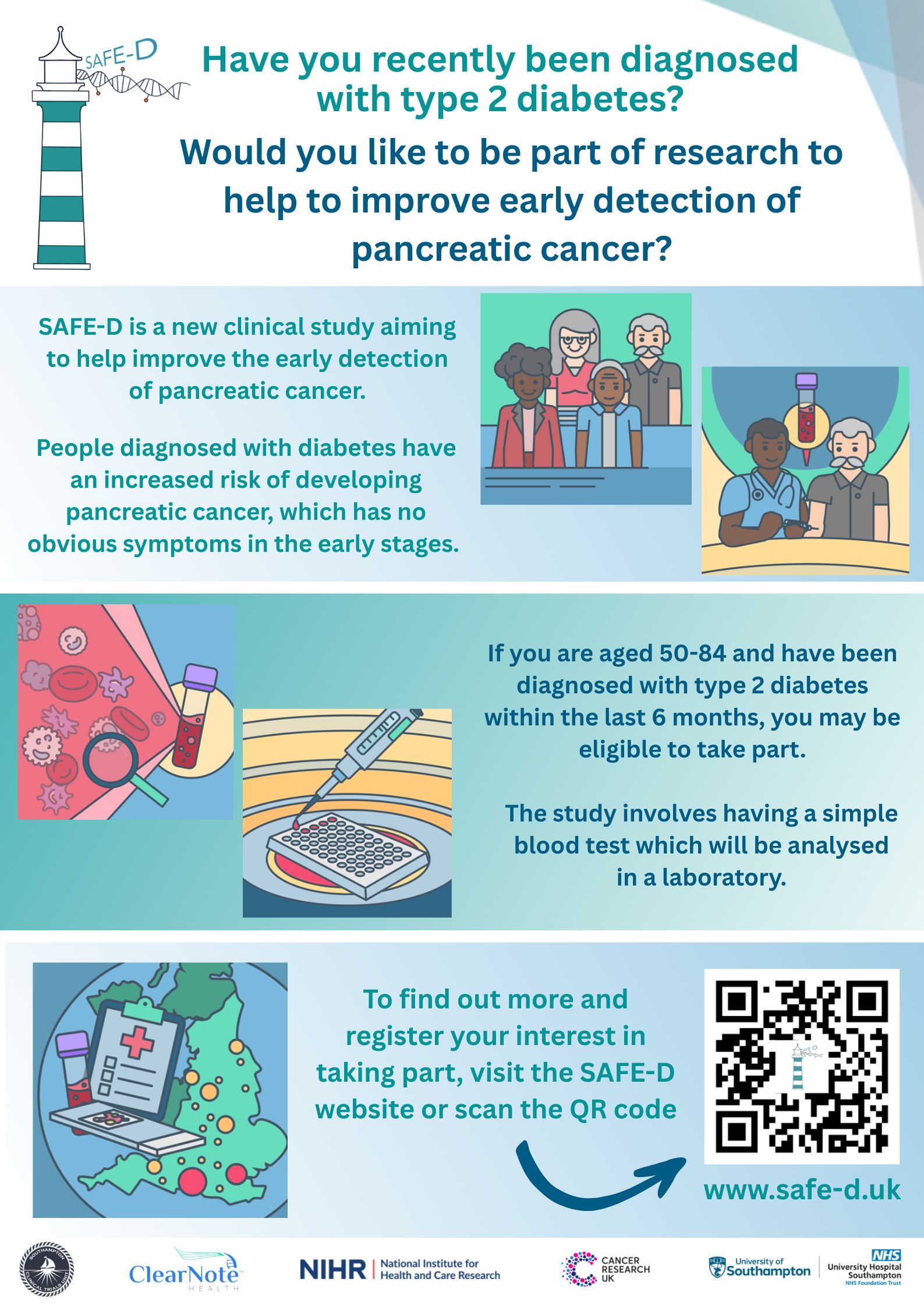
Avantect – Pancreatic Cancer Blood Test for Type 2 Diabetics
SAFE-D is a clinical research study that aims to test how well a new blood test called Avantect works to detect very small signals of pancreatic cancer at an early stage.
It is known that people recently diagnosed with type 2 diabetes have a slightly higher than normal risk for developing pancreatic cancer. Pancreatic cancer has no obvious symptoms in its early stages, making it difficult to diagnose when it is easiest to treat. Unfortunately, at the moment, there is no simple screening test for the disease.
If the Avantect blood test is proven to accurately detect the presence of pancreatic cancer early enough, it will have life-changing benefits for many thousands of people with newly diagnosed diabetes.
The study team is looking for patients who have been diagnosed with type 2 diabetes within the last 6 months and aged between 50 and 84 years old.
For further information contact: hiowicb-hsi.chawtonparkresearch.patients@nhs.net
 Chawton Park C.O.R.E